
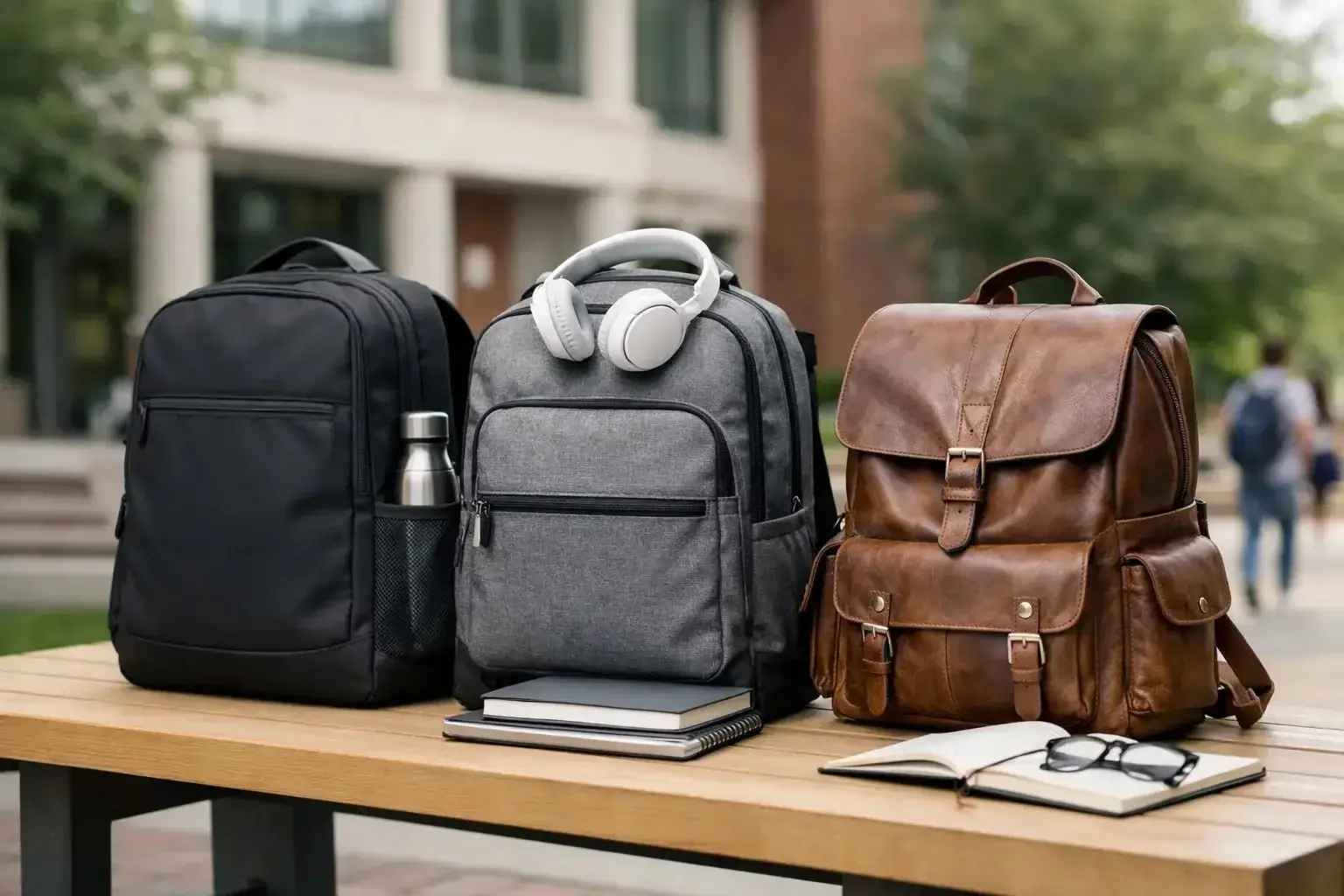

Bags look simple, but small design choices change everything. The shape decides what fits. The straps decide how it feels after an hour. The compartments decide whether you find your keys or dig for them. Understanding the different types of bag designs helps you pick one that matches your day, not just your outfit.
Types of Everyday Bags
Types of everyday bags fall into a few main groups. Totes are open and roomy. Backpacks spread weight across both shoulders. Duffles offer a large, flexible main space. Crossbody bags sit against the hip and keep your hands free. Messenger bags and satchels sit somewhere in between.
Each type has a natural job. A tote works for quick errands. A backpack suits long walks. A duffle handles gym and travel needs. A crossbody fits a phone, wallet, and keys.
Start with what you carry most. That answer narrows the field quickly.
Duffle Bag Compartments
Duffle bag compartments usually include one big main space plus smaller helpers. End pockets hold shoes or wet items. A side pocket holds a bottle or documents. Some models add an inner zip pocket for valuables.
The simple open design is the point. You can pack in odd shapes, like a helmet or a rolled mat, without fighting a rigid frame.
Many brands and teams start with blank duffle bags because the clean surface takes printing and embroidery well. The compartments stay the same, so the bag works for gym kits, travel, or event giveaways.
Add a few packing cubes inside and the open space becomes organized without any extra stitching.
Crossbody Bag Design
Crossbody bag design centers on carrying close to the body. The strap goes over one shoulder and across the chest, so the bag rests at your side or hip. It is harder to snatch and easier to carry for long periods.
Sizes vary. Small ones hold a phone, cards, and keys. Medium ones add a water bottle and a small book. The bag stays slim so it does not swing when you walk.
Closure choices matter. Zippers are secure. Flap closures with magnets or snaps are quick to open. A hidden back pocket is a useful spot for a passport or spare cash.
For stores that want an easy, daily-use style, wholesale crossbody bags cover a wide range of sizes and strap lengths.
Everyday Bag Functionality
Everyday bag functionality is about how fast you can use it. A good bag lets you grab your phone with one hand. It stands upright on a table. It stays closed when you bend over.
Test a few things. Can you reach the main pocket while wearing the bag? Does the zipper run smoothly? Does the bag keep its shape when it is half full?
Weight is another factor. Heavy hardware and thick lining add up. A bag that weighs two pounds empty feels heavy before you add anything.
Bag Strap Construction
Bag strap construction decides how long the bag lasts and how it feels. Webbing, a flat woven strap, is common because it is strong and light. Leather looks sharp, though it can stiffen. Padded straps spread pressure on the shoulder.
Look at the attachment point. Straps should connect with reinforced stitching, often in a box or X pattern. Metal clips and D-rings should be solid, not thin.
Adjustability helps. A strap that goes from short to long lets you wear the bag high on the hip or low across the body. Anti-slip backing keeps it from sliding off a smooth jacket.
Practical Bag Storage Features
Practical bag storage features are small details that save time. A key clip keeps keys from sinking to the bottom. A slip pocket holds a phone or transit pass. A zippered pocket protects cards and cash.
Interior organization is useful. Several small pockets stop items from mixing. Elastic loops hold pens or a charger. A padded sleeve protects a tablet.
Do not overdo it. Too many pockets add weight and make it harder to remember where things are. Pick a few well-placed ones.
How to Pick the Right Design
Start with your daily load. Write down what you carry for a week. You may find it is less than you think.
Next, think about movement. If you walk, bike, or take transit, hands-free styles like crossbody bags and backpacks help. If you travel by car, a duffle is simple and roomy.
Then test fit. Wear the bag loaded for a few minutes. Look for strap pressure, bouncing, and hard-to-reach pockets.
The Takeaway
The different types of bag designs each answer a different question. Duffles give you an open room. Crossbody bags give you quick access and free hands. Compartments, straps, and closures turn either one into a bag you actually enjoy using.
Choose by routine, not by trend. The right design fades into the background and just works.
